

close
Choose Your Site
Global
Social Media
Reliable shutoff mechanisms are vital for modern industrial fluid control. Unplanned downtime causes massive operational and financial losses daily. Fugitive emissions also present severe environmental and safety risks. Plant managers simply cannot afford unexpected failures in critical pipelines. Ball Valves are ubiquitous across processing facilities globally. They control everything from benign water lines to highly corrosive acids. However, specifying the wrong structural design causes premature wear. Selecting inadequate seating materials leads to dangerous safety hazards. These mistakes frequently result in catastrophic compliance failures. Many buyers underestimate these technical nuances during the initial procurement phase. This guide provides engineers and procurement professionals a strict evaluation framework. We will help you shortlist, specify, and source the right components. You will learn to evaluate complex designs for highly demanding applications. Our approach prioritizes structural integrity, material authenticity, and strict industry compliance. Master these fundamental principles to ensure long-term reliability in your processing systems.
Application-Specific Geometry: Trunnion-mounted designs are mandatory for high-pressure systems, while V-type ball valves offer precise throttling beyond basic on/off capabilities.
Material Authenticity Matters: Selecting the correct alloy (e.g., verifying 304/316 stainless steel against inferior 202 grades) is critical for extreme or corrosive chemical environments.
Compliance & Safety: Shortlisted valves must align with industry-specific certifications (e.g., API, ASME, NACE) to mitigate liability and ensure operational safety.
Valve failure carries a massive and immediate financial impact. Product loss directly hurts your daily operational bottom line. Uncontained chemical spills require expensive environmental remediation efforts. Safety incidents threaten personnel and trigger heavy regulatory fines. Pipeline depressurization downtime halts entire facility production schedules. Plant operators must treat flow control components as critical infrastructure assets. You cannot view them as disposable commodity hardware.
Successful deployment requires highly specific and measurable metrics. Zero-leakage isolation is absolutely non-negotiable for hazardous media systems. Industry engineers routinely call this a bubble-tight shutoff standard. Predictable torque requirements ensure automated actuators function correctly over years. Component ratings must strictly align to your system pressure parameters. Temperature extremes must also match the specified design thresholds perfectly. Every element must work together to maintain continuous plant operation.
Procurement teams frequently stumble into two very common pitfalls. First, they over-specify components for relatively benign applications. They waste precious budget on unnecessary high-pressure ratings. Second, they dangerously under-specify critical emergency isolation points. Using standard PTFE seats in abrasive slurry media guarantees rapid failure. You must balance system requirements perfectly to avoid these costly extremes.
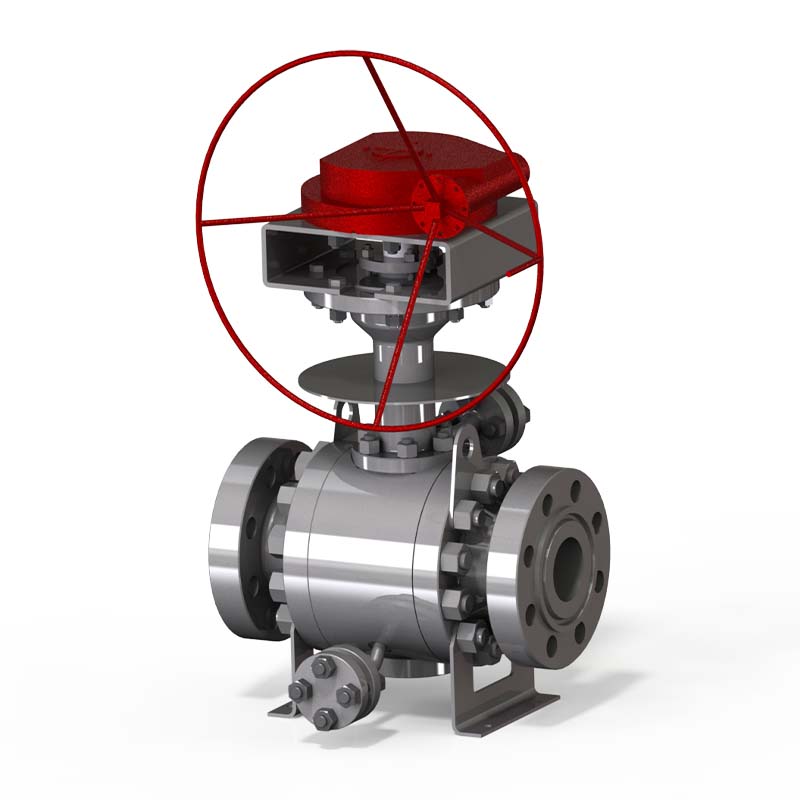
Matching the physical internal design to your pipeline flow is essential. Ball Valves come in multiple distinct geometric configurations. You must understand the mechanical differences to make informed decisions.
Floating designs rely on upstream pipeline pressure for effective sealing. Line pressure pushes the free-floating sphere firmly against the downstream seat. This mechanical action creates a tight, reliable seal. This mechanism works perfectly for smaller pipe diameters. It also performs exceptionally well in standard low-pressure utility lines. However, high-pressure pipelines easily overwhelm floating mechanisms. High flow rates push the sphere too hard into the seat. This extreme friction causes rapid material degradation. Demanding applications require heavy-duty trunnion-mounted designs instead. A trunnion mechanically anchors the sphere securely at the top and bottom. This rigid anchoring absorbs the immense pipeline thrust. It drastically lowers the required operating torque. It also ensures highly stable sealing under extreme pressure fluctuations.
Internal port size directly impacts fluid flow resistance. Full port designs feature an internal bore matching the pipe diameter exactly. They provide zero flow restriction during normal operation. They also guarantee zero pressure drop across the mechanism. Standard or reduced port designs have a noticeably smaller internal bore. They offer a significant cost-saving alternative for large projects. The reduced body size requires less metal during manufacturing. You should use reduced ports only where slight flow restriction is non-critical.
Standard spherical designs strictly handle binary on/off control applications. Leaving them partially open causes severe fluid turbulence. This turbulence quickly degrades the soft seating materials. V-type designs specifically solve this common industrial problem. They feature a specialized V-notched profile machined into the sphere. This notch allows for incredibly precise flow modulation. You can throttle aggressive liquids and gases accurately. V-type models provide true control valve performance in a compact footprint.
Material substitution poses a severe risk in modern industrial procurement. Inferior metal alloys fail rapidly in harsh chemical environments. We must scrutinize metallurgical composition during every purchasing cycle.
We must evaluate 304 and 316 stainless steel carefully. Grade 316 contains valuable molybdenum for enhanced pitting corrosion resistance. This addition makes it ideal for offshore or chemical applications. Grade 304 lacks this specific element entirely. It still offers excellent general durability for benign water or air lines. Lower-grade alternatives like 202 lack adequate stabilizing nickel content. They suffer from exceptionally poor tensile strength. They also rust easily when exposed to mild moisture. You should never use 202 grades for critical industrial processing pipelines.
Aggressive media demand highly specialized body materials. Standard stainless steel cannot survive extreme corrosive attacks. Hastelloy excels in highly acidic chemical lines. Duplex stainless steel offers superior tensile strength in chloride-rich environments. Internal seating materials also require major upgrades for extreme conditions. Standard PTFE deforms under extreme heat. PEEK seats handle high-temperature steam efficiently without melting. Metal-to-metal seating is absolutely mandatory for handling abrasive slurries. Standard soft seats will shred under these harsh abrasive conditions instantly.
You cannot trust simple visual inspections for alloy verification. Unscrupulous suppliers often stamp incorrect grades on cheap metals. Always request formal Material Test Reports (MTRs) from your manufacturer. These critical documents trace the exact chemical composition of the metal heat. You should also demand Positive Material Identification (PMI) testing. PMI utilizes specialized X-ray fluorescence guns to scan the metal surface. This testing guarantees alloy authenticity before installation begins.
A rigorous evaluation framework prevents costly installation errors downstream. You must assess actuation readiness, pressure ratings, and strict regulatory compliance. We built this framework to protect your facility from catastrophic failures.
Modern processing facilities rely heavily on remote automation. You must evaluate internal components for pneumatic, electric, or hydraulic actuators. Always check for standard ISO 5211 mounting pad availability. This universal mounting standard simplifies actuator integration drastically. It eliminates the need for expensive custom mounting brackets. You also need to verify the inherent breakaway torque requirements. Sticky media significantly increases the torque needed to turn the sphere. High-torque systems require oversized, expensive actuators. Sizing actuators incorrectly leads to stalled mechanisms during critical emergencies.
Heat severely degrades pressure resistance in all polymer materials. You must read published P-T charts very carefully. These charts map maximum allowable pressure against operating temperature ranges. Ensure the body and seat materials can withstand both extremes simultaneously. A component rated for high pressure at room temperature might fail instantly if temperatures spike. Engineers must calculate for the worst-case operational scenario.
Standard | Focus Area | Primary Industry Application |
|---|---|---|
API 608 / 6D | Design and Pipeline Valves | Petrochemical and Oil & Gas |
ASME B16.34 | Pressure-Temperature Ratings | General Industrial and Power |
API 607 | Fire-Safe Testing Requirements | Hazardous and Flammable Media |
Regulatory compliance shields your facility from immense legal liability. Shortlist only components meeting specific, recognized industry standards. API 608 and 6D regulations dominate the global petrochemical sector. ASME B16.34 strictly governs wall thickness and pressure ratings. Fire-safe testing standards like API 607 are highly critical. They ensure components maintain a tight seal during facility fires. Passing these tests prevents flammable media from feeding ongoing plant fires.
Proper installation and routine maintenance dictate total equipment lifespan. Even the best designs fail under poor implementation practices. Your field technicians must understand these specific mechanical nuances.
Careless rollout errors ruin perfectly good control equipment. Pipe misalignment is a remarkably frequent field issue. It causes immense mechanical stress on the cast valve body. This stress eventually warps the internal seating surfaces. Improper welding techniques present another major operational danger. Technicians often fail to dismantle three-piece units before socket welding. The extreme heat instantly melts and destroys the soft internal seats. You must always remove the center section before applying high heat.
Serviceability varies wildly across different structural body types. You must plan for long-term maintenance accessibility during procurement.
1-Piece Bodies: These are cheap but absolutely impossible to repair inline. You must discard them completely upon failure.
2-Piece Bodies: These offer better flow characteristics but still require complete pipeline removal for internal service.
3-Piece Bodies: These specialized models allow for simple inline maintenance. You remove a few bolts, and the center section swings out easily. This brilliant swing-out design drastically reduces long-term field labor costs.
A concise, scheduled inspection framework prevents catastrophic failures. Check for stem packing leaks at least monthly. Minor gland tightening usually stops early fugitive emissions. Calibrate your pneumatic and electric actuators quarterly to ensure precision. Finally, perform regular cycle testing on emergency shutdown equipment. Exercising the equipment frequently prevents the internal sphere from seizing.
Specifying Ball Valves requires incredible attention to detail. You must constantly balance fluid characteristics, pressure demands, and material chemistry. Overlooking any single factor heavily compromises overall system integrity. We strongly recommend using a phased shortlisting approach to ensure operational success.
First, clearly define your media type and strict P-T limits.
Second, select the optimal structural type based on specific flow demands.
Third, rigorously verify material authenticity through testing documentation.
Compile your exact flow data and pipeline specifications now. Consult a certified engineer to review your technical requirements. Alternatively, request a detailed technical RFQ to validate your specifications today. Taking these proactive steps guarantees maximum safety and efficiency.
A: Ball Valves operate using a quick quarter-turn mechanism. They offer rapid cycle speeds and excellent bubble-tight sealing reliability. They also feature a compact footprint. Gate valves use linear motion to lower a solid gate. They require multiple turns, making them much slower to operate. Gate valves are generally preferred for large-diameter pipelines.
A: No. Standard spherical designs are strictly for binary on/off isolation. Leaving them partially open exposes the soft seats to high-velocity flow. This causes rapid seat wear and inevitable leakage. Scenarios requiring precise flow modulation demand V-type designs. V-port geometry allows accurate throttling without degrading the primary sealing surfaces.
A: You should never rely on visual inspection or simple manufacturer stamps. Always request formal Material Test Reports (MTRs) before purchasing. Additionally, demand Positive Material Identification (PMI) testing. PMI uses X-ray fluorescence to confirm the exact elemental composition of the metal. Trusting audited manufacturers with proven quality systems is also vital.
A: Seizing usually stems from media buildup, thermal expansion, or seat degradation. Sticky or abrasive fluids can trap particulate matter between the sphere and the seats. Extreme heat can cause internal components to expand and bind tightly. Routine cycle testing prevents stagnation. Selecting proper seat materials for your specific temperature range prevents thermal binding.


