

close
Choose Your Site
Global
Social Media
Unreliable fluid isolation in industrial piping carries a heavy price for any facility. Leaking systems quickly cause devastating product losses, trigger unplanned downtime, and create severe safety hazards. Engineers constantly battle these risks when designing robust process networks. They need dependable shutoff solutions to maintain system integrity under demanding conditions. We position Ball Valves as the industry standard for rapid, high-cycle on-and-off control. However, you must acknowledge they are not a universal fix for every fluid dynamic challenge encountered in the field. This article provides a transparent, engineering-focused evaluation of their core capabilities and specific industrial use cases. You will discover exactly how they function, where they excel, and what critical limitations to watch out for. We will guide you through crucial system design considerations and standards compliance to help you make informed procurement choices.
Ball valves offer superior bubble-tight shutoff and minimal pressure drop compared to globe or gate valves.
Standard designs are strictly for isolation (on/off); throttling requires specialized V-port configurations.
Selecting between floating and trunnion-mounted designs depends heavily on system pressure and pipe diameter.
Implementation success requires accounting for cavity pressure relief and breakaway torque during actuator sizing.
Engineers consistently default to this specific design for critical isolation tasks. The underlying mechanics translate directly to measurable operational outcomes. Understanding these physical traits helps you apply them correctly across complex piping networks.
The primary duty of any isolation valve is to stop flow completely. Ball Valves achieve exceptional sealing through simple geometry. A highly polished spherical closure rotates against stationary elastomeric or metal seats. Line pressure compresses the seating material against the sphere. This compression yields a Class VI shutoff rating. Facilities rely on this zero-leakage performance to contain hazardous chemicals safely. The wiping action of the sphere also cleans the seating surface during every cycle. This self-cleaning mechanism ensures long-term reliability in clean fluid applications.
Pumping fluid through complex pipelines consumes massive amounts of energy. Flow restrictions force pumps to work harder. Full-bore designs feature an internal diameter matching the pipeline perfectly. The fluid passes through an entirely unobstructed channel. You eliminate turbulence almost entirely. The system maintains a very high flow coefficient (Cv). This minimal pressure drop directly reduces daily pumping energy costs. System designers favor this unrestricted pathway when efficiency remains a top priority.
Speed matters during process emergencies. You actuate these devices using a simple 90-degree rotation. The mechanism moves from fully open to fully closed instantly. Contrast this rapid action against multi-turn gate valves. Gate valves require numerous stem rotations to isolate a line. Operators waste precious time turning heavy handwheels. The quarter-turn action makes these units ideal for emergency shutdown (ESD) systems. Automation also becomes significantly easier. Pneumatic and electric actuators pair seamlessly with short-stroke, quarter-turn mechanisms.
Industrial piping galleries often suffer from severe space constraints. Traditional linear-motion valves require extensive vertical clearance to accommodate rising stems. Quarter-turn configurations eliminate this vertical bulk. They deliver a remarkably high strength-to-weight ratio. You save substantial installation space. Maintenance teams appreciate the compact footprint when working in tight, elevated pipe racks. The reduced weight also places less physical stress on adjacent piping supports.
No single component solves every engineering challenge. Misapplying equipment leads to catastrophic system failures. You build trust by understanding exactly where these units struggle.
Standard models perform terribly at flow control. They belong strictly in fully open or fully closed positions. Partially opening a standard spherical closure exposes the soft seat to high-velocity flow. The concentrated fluid rushes past the narrow opening. This extreme velocity causes rapid seat erosion. Cavitation bubbles form and collapse violently against the internal components. The resulting vibration and wear will destroy the seating integrity quickly. You must avoid using standard versions for throttling tasks.
Abrasive media represents a major enemy to soft-seated configurations. Solid particles scratch the highly polished sphere. Gritty materials frequently get trapped between the rotating surface and the stationary seat. This grinding action ruins the tight seal. Premature failure happens almost immediately in heavy slurry applications. You can mitigate this by upgrading to severe-service metal-seated variants. However, standard models should remain dedicated to clean liquids and gases.
A hidden danger exists within the hollow body cavity. When you close the unit, fluid becomes trapped inside this void space. Ambient heat or process heat causes thermal expansion. The trapped liquid expands rapidly. Internal pressure spikes well beyond the maximum safety rating. This overpressure can blow out the soft seals or even fracture the metal body. You must specify specialized cavity-relief designs when handling volatile or heat-sensitive liquids.
Operating temperature dictates seating material selection. Standard models typically use PTFE, Teflon, or similar elastomeric polymers. These soft materials deliver excellent sealing at ambient temperatures. Unfortunately, they degrade rapidly under high heat. The polymers lose their shape and fail to hold pressure. You cannot use standard soft seats for high-pressure steam or extreme-heat hydrocarbons. Such environments necessitate expensive metal-to-metal seating upgrades to survive the thermal stress.
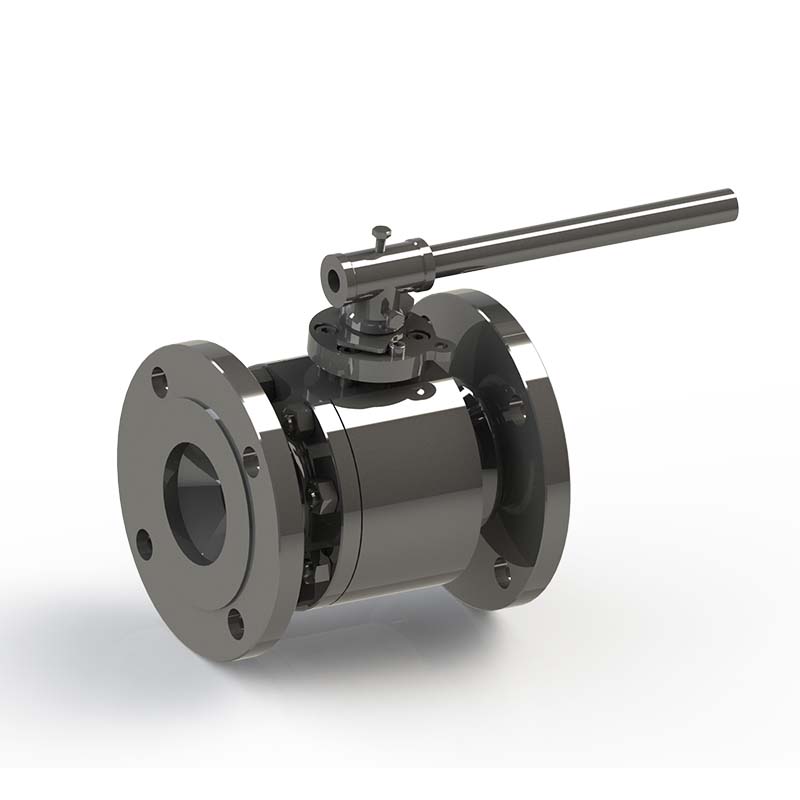
Matching the physical architecture to the process conditions guarantees system longevity. Engineers navigate a proven decision framework based on pressure, pipe size, and flow requirements.
Table: Structural Comparison of Floating and Trunnion Designs
Feature | Floating Design | Trunnion-Mounted Design |
|---|---|---|
Anchoring Method | Unanchored; line pressure moves the closure component. | Mechanically anchored at the top and bottom stems. |
Pressure Suitability | Low to medium pressure applications. | High pressure and severe service applications. |
Pipe Diameter | Typically smaller diameters (under 8 inches). | Ideal for large diameter pipelines. |
Operating Torque | Higher torque due to heavy seat friction. | Lower torque; bearing mounts absorb line pressure. |
Cost Profile | Highly cost-effective. | Higher initial manufacturing cost. |
The floating architecture remains the most common and cost-effective choice for smaller diameters. The internal sphere is not rigidly anchored. Upstream line pressure physically pushes the sphere downstream into the soft seat. This physical displacement creates the tight seal. It works perfectly for low-pressure utilities.
Trunnion-mounted designs take a different approach. Mechanical shafts anchor the sphere at the top and bottom. Upstream pressure pushes the floating seats against the stationary sphere instead. This configuration absorbs massive hydraulic loads. It significantly reduces operating torque and seat wear. Trunnion designs are mandatory for high-pressure pipelines and large-diameter process lines.
Port sizing determines the internal flow restriction. Full-bore (or full-port) models feature an internal passage identical to the connected pipe. You need full-bore configurations for any system requiring pipeline pigging. They also suit processes demanding absolute zero flow restriction.
Reduced-bore models feature a smaller internal passage than the pipe diameter. The fluid experiences a slight bottleneck and pressure drop. They offer a more compact body and lower manufacturing costs. Engineers specify reduced-bore options when a minor pressure drop remains perfectly acceptable for the process.
We established earlier that standard designs cannot throttle flow. The V-port configuration serves as the sole exception. Engineers machine a contoured "V" shape directly into the spherical closure. As you rotate the mechanism, the V-notch gradually opens. This allows for precise, characterized flow control. The design resists cavitation and minimizes erosion. V-port units give you excellent throttling capabilities while still maintaining tight shutoff abilities when fully closed.
Different industries enforce strict operational standards. Facilities must match physical capabilities to rigid regulatory requirements to ensure safe production.
Oil and Gas (Upstream and Midstream):
Pipelines demand rugged reliability. Technicians install these units at pigging stations, wellheads, and emergency shutdown zones. They isolate massive volumes of high-pressure hydrocarbons instantly. Equipment in this sector must meet API 6D specifications for pipeline applications. Furthermore, they must pass strict API 607 fire-safe testing. Fire-safe models feature secondary metal seating edges. If a fire melts the primary soft seat, the metal edge provides a backup seal to prevent fuel leakage.
Chemical and Petrochemical Processing:
Chemical plants handle highly corrosive fluids and volatile organic compounds (VOCs). Standard carbon steel corrodes rapidly here. Facilities rely heavily on specialized materials like Hastelloy, Monel, and Duplex stainless steels. Preventing fugitive emissions remains a top priority. Toxic gases leaking through the valve stem threaten worker safety and violate environmental laws. Ball Valves used here must comply with ISO 15848 standards. These strict emission guidelines dictate specialized packing materials and advanced stem seal architectures.
Water and Wastewater Treatment:
Municipal water facilities focus heavily on cost-efficiency and corrosion resistance. They utilize these units for chemical dosing, pump isolation, and distribution networks. High-end exotic alloys are unnecessary here. Plants primarily utilize heavy-duty PVC or standard 316 stainless steel body materials. PVC offers excellent resistance to sodium hypochlorite and other common treatment chemicals. The straightforward floating design handles clean water applications flawlessly for decades.
Successful procurement goes beyond matching technical specifications. Experienced engineers evaluate practical operational risks before issuing purchase orders.
You will face higher upfront purchasing costs when comparing these to equivalent butterfly or gate valves. The precision machining of the spherical closure demands tighter manufacturing tolerances. However, you must evaluate this initial expense against longevity. These units survive high-cycle applications far better than their linear-motion counterparts. The self-cleaning wiping action preserves the seat integrity over thousands of cycles. You benefit from significantly lower maintenance frequencies. The extended operational lifespan easily offsets the higher initial sourcing price.
Undersizing automated actuators remains a common and costly mistake. When a unit sits dormant in the closed position for months, the soft seat binds to the metal sphere. This adhesion creates a massive spike in friction. The actuator must deliver enormous initial force to break this seal. Engineers call this "breakaway torque." If you size the actuator based purely on running torque, it will fail to open the bound valve during an emergency. Always calculate actuator sizing using the maximum anticipated breakaway torque under full differential pressure.
Future maintenance requirements should heavily influence your chosen body style. Top-entry models allow for complete inline maintenance. Technicians simply unbolt the top bonnet to access the internal components. They replace worn seats without cutting the pipe or breaking flange connections. Conversely, side-entry or split-body models require complete removal from the pipeline line for any internal repairs. If your process runs continuously and permits minimal downtime, investing in top-entry configurations saves countless maintenance hours.
Choosing the right isolation equipment fundamentally dictates process safety and operational efficiency. You rely on these quarter-turn mechanisms because they provide unparalleled bubble-tight isolation and unrestricted flow paths. While they remain the industry standard for on/off control, you must respect their limitations regarding throttling, abrasive slurries, and extreme temperatures. Properly matching floating or trunnion designs to your pressure demands prevents catastrophic failures. Your next step involves conducting a thorough audit of your process parameters. Document your exact pressure, temperature, and media characteristics. Consult directly with a valve engineering specialist to generate an accurate, standards-compliant specification sheet before finalizing any procurement.
A: Yes, standard floating designs are typically bi-directional. Line pressure pushes the closure against the downstream seat regardless of flow direction. However, many trunnion-mounted models and specialized metal-seated variants possess a preferred flow direction. You must check the directional arrow cast into the body before installation.
A: A ball valve uses a 90-degree quarter-turn motion for rapid shutoff and offers superior bubble-tight sealing. A gate valve uses a multi-turn linear stem to raise or lower a solid gate. Gate valves actuate slower but offer a more cost-effective solution for large-diameter utilities.
A: Longevity depends entirely on cycle frequency, media purity, and seat material. In clean water or gas applications, high-quality units easily last over a decade. In highly abrasive or high-cycle chemical environments, soft seats may require replacement every few years. Preventive maintenance dramatically extends their operational life.


