

close
Choose Your Site
Global
Social Media
TL;DR: When designing and maintaining fluid control systems, engineers frequently face the critical decision of selecting the appropriate isolation valve. The debate between using a ball valve versus a gate valve is one of the most common in the piping industry. While ball valves offer rapid, quarter-turn shutoff capabilities and excellent sealing, gate valves provide unparalleled advantages in high-pressure, high-temperature, and large-diameter applications due to their unobstructed flow path and gradual operation that prevents water hammer. This comprehensive guide explores the deep technical differences, operational mechanics, and industrial applications to help you determine which valve is right for your specific needs.
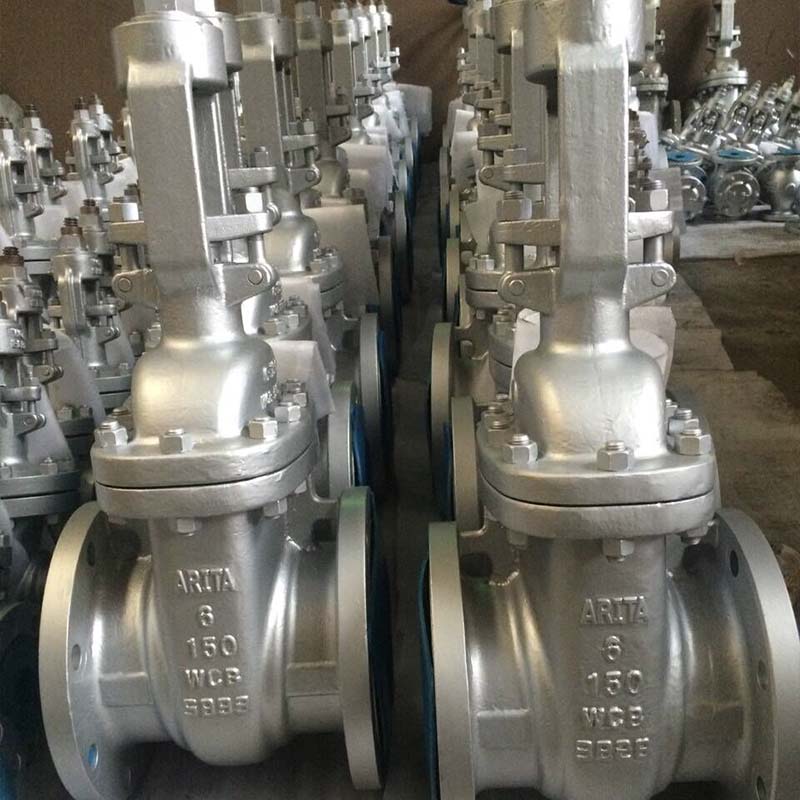
Fluid dynamics, system pressure, temperature variations, and the specific nature of the media being transported all play a pivotal role in valve selection. Making the wrong choice can lead to catastrophic system failures, severe pressure drops, premature wear, and costly downtime. To make an informed decision, it is essential to understand the fundamental mechanics, structural differences, and long-term operational characteristics of both valve types. Below, we break down everything you need to know about these two vital components of industrial piping.
A gate valve is a linear motion isolation valve designed primarily to start or stop the flow of fluid within a pipeline. As the name suggests, it operates by lifting a rectangular or circular "gate" (also known as a wedge or disc) out of the path of the fluid. When the valve is fully open, the gate is completely drawn up into the valve bonnet, leaving the pipeline entirely unobstructed. This design results in virtually zero resistance to flow, making it highly efficient for systems where minimizing pressure drop is a primary concern.
To fully appreciate how this valve functions, it is necessary to examine its primary internal components. The architecture of the valve is designed for durability and high-pressure retention. The key components include:
The Body: The main pressure-retaining boundary of the valve. It connects to the piping system via flanged, threaded, or welded end connections. The body houses the internal parts and provides the seating surface for the gate.
The Bonnet: This component covers the top of the valve body, enclosing the stem and the gate when the valve is in the open position. Bonnets can be bolted, welded, or utilize a pressure-seal design for extreme high-pressure applications.
The Gate (Wedge): The physical barrier that stops the flow. Gates come in various designs, including solid wedges for general applications, flexible wedges to compensate for seat deformation due to temperature changes, and split wedges for highly corrosive environments.
The Stem: A threaded shaft that connects the handwheel or actuator to the gate. Turning the stem translates rotational motion into the linear motion required to lift or lower the gate.
The Seat: The interior surface against which the gate rests to create a watertight seal. Seats can be integrally cast into the body or pressed in as separate rings made of harder materials to resist wear.
One of the critical design variations in these valves is the stem configuration. A rising stem (often referred to as OS&Y - Outside Screw and Yoke) moves upward as the valve is opened. This provides a clear, immediate visual indication of whether the valve is open or closed. Furthermore, the stem threads are isolated from the process media, protecting them from corrosion and debris. Conversely, a non-rising stem remains stationary in terms of vertical movement; the gate threads its way up the stem inside the valve body. This design is highly advantageous in underground installations or environments where vertical space is severely limited.
While linear motion valves have their distinct advantages, rotary motion valves—specifically ball valves—serve as a highly effective alternative in many modern piping systems. A ball valve utilizes a hollow, perforated, pivoting sphere (the ball) to control fluid flow. When the valve is open, the hole through the ball aligns perfectly with the flow path. When closed, the ball is rotated 90 degrees by the valve handle, completely blocking the flow.
The fundamental difference lies in the motion required for operation. While a linear valve requires multiple turns of a handwheel to slowly lift a wedge, a ball valve requires only a simple quarter-turn (90 degrees) to transition from fully open to fully closed. This makes ball valves incredibly fast to operate and highly suitable for emergency shutoff situations.
Additionally, ball valves typically utilize soft seats made of elastomeric materials such as PTFE (Teflon), PEEK, or Nylon. These soft seats provide an exceptionally tight, bubble-tight seal, making ball valves highly resistant to internal leakage, especially in gas applications. However, these soft materials also limit the temperature and pressure ranges of standard ball valves compared to their heavy-duty metal-seated counterparts.
Choosing between these two valves requires a deep dive into how they perform under various operational stresses. Engineers must evaluate flow characteristics, operational speed, physical dimensions, and long-term maintenance requirements.
One of the most significant differences between the two valves is the speed of operation. A ball valve's quarter-turn mechanism allows for instantaneous shutoff. While this is beneficial in emergencies, rapidly closing a valve in a high-velocity liquid system can cause a dangerous phenomenon known as "water hammer" (hydraulic shock). The sudden halt of fluid momentum creates a massive pressure spike that can rupture pipes, blow out gaskets, and destroy instrumentation.
In contrast, the multi-turn operation of a gate valve inherently prevents water hammer. Because it takes numerous rotations of the handwheel to lower the wedge into the fluid path, the flow is reduced gradually. This slow closure allows the kinetic energy of the moving fluid to dissipate safely, protecting the integrity of the entire piping network. For large-diameter water mains and high-pressure liquid lines, this gradual operation is not just a benefit; it is a strict safety requirement.
Efficiency in fluid transportation is often measured by the pressure drop across a component. When a gate valve is fully open, the wedge is completely retracted into the bonnet. The internal diameter of the valve matches the internal diameter of the pipe, creating a straight-through, unobstructed flow path. This results in an exceptionally low pressure drop coefficient (Cv), meaning pumps do not have to work as hard to push fluid through the system, saving significant energy costs over time.
While full-port ball valves also offer a straight-through flow path, many standard ball valves are "reduced port" or "standard port." In a reduced port ball valve, the bore through the ball is one pipe size smaller than the valve's connection size. This restriction creates a bottleneck, increasing fluid velocity, causing turbulence, and resulting in a higher pressure drop compared to a fully open linear wedge valve.
Sealing mechanisms differ drastically between the two designs. Ball valves rely on the pressure of the fluid to push the floating ball against the downstream soft seat, creating a tight seal. This works exceptionally well for clean fluids and gases. However, if the fluid contains abrasive particulates (like sand, scale, or slurries), these particles can scratch the soft PTFE seats or the polished surface of the ball, leading to permanent leakage.
A gate valve, on the other hand, relies on metal-to-metal seating. The wedge is forcefully driven down between two angled metal seats. This mechanical wedging action creates a robust seal that can withstand incredibly high pressures and extreme temperatures that would melt or deform the soft seats of a ball valve. Furthermore, the metal-to-metal contact can shear through small amounts of debris or scale buildup in the pipeline, ensuring a secure closure even in less-than-ideal fluid conditions.
Space constraints often dictate valve selection. Ball valves are generally compact in their vertical dimension but require horizontal clearance for the handle to swing 90 degrees. They are also typically longer end-to-end than comparable linear valves.
Conversely, a gate valve has a very short end-to-end dimension (face-to-face length), making it ideal for tight installations along the length of a pipe. However, because the wedge must be lifted entirely out of the flow path, these valves require significant vertical clearance, especially if an OS&Y rising stem design is utilized. Engineers must carefully measure the available space above the pipeline to ensure the valve can be fully opened and serviced.
Because of their unique operational characteristics, these valves are the undisputed standard in several heavy industries. They are designed for "on/off" isolation and should never be used for throttling (regulating flow), as the high-velocity fluid rushing past a partially open wedge will cause severe vibration, noise, and rapid erosion of the seats (a phenomenon known as wire drawing).
In the upstream, midstream, and downstream sectors of the oil and gas industry, high pressure and high temperatures are the norm. Refineries utilize heavy-duty forged steel and cast steel linear wedge valves to isolate sections of piping for maintenance. API 600 and API 602 standard valves are ubiquitous in these environments. Their ability to maintain a secure metal-to-metal seal during a fire (fire-safe design) makes them critical for plant safety. Furthermore, their unobstructed flow path allows for pipeline "pigging"—the process of sending a cleaning or inspection device (a "pig") through the pipeline without getting stuck.
Municipal water distribution networks rely almost exclusively on these valves for underground mains. Cast iron and ductile iron valves with resilient seated wedges (where the wedge is coated in EPDM or NBR rubber) provide a bubble-tight seal for drinking water systems. The slow, multi-turn operation is crucial here to prevent water hammer from bursting underground city water mains. The non-rising stem variations are particularly favored as they can be buried directly in the ground and operated via a surface-level valve box and a T-key.
In thermal and nuclear power plants, steam is transported at extreme pressures and temperatures that far exceed the physical limits of any elastomeric or polymeric material. Pressure-seal bonnet gate valves are specifically engineered for these extreme environments. In a pressure-seal design, the higher the internal system pressure, the tighter the seal becomes between the valve body and the bonnet. This makes them the only viable choice for main steam isolation lines and boiler feedwater systems.
The reliability of a piping system is only as good as its weakest component. When dealing with high pressures, toxic chemicals, or critical infrastructure, valve failure is not an option. This is why partnering with a reputable, certified gate valve manufacturer is one of the most important decisions a procurement engineer can make.
A top-tier manufacturer does not simply cast metal and assemble parts; they adhere to rigorous international standards. Quality manufacturers ensure their products meet or exceed standards set by the American Petroleum Institute (API), the American Society of Mechanical Engineers (ASME), and the International Organization for Standardization (ISO).
Before a valve leaves a premium facility, it undergoes extensive testing. This includes hydrostatic shell testing to ensure the body can withstand pressures well beyond its rated capacity without rupturing, and high-pressure seat testing to guarantee zero leakage. Furthermore, advanced manufacturers conduct fugitive emissions testing to ensure volatile organic compounds (VOCs) do not escape through the stem packing into the atmosphere, which is critical for environmental compliance in chemical processing plants.
Industrial applications often require highly specific metallurgical compositions to combat severe corrosion, such as sour gas (H2S) environments in oil extraction. A reliable manufacturer provides complete Material Test Reports (MTRs) and ensures full traceability of every heat of steel used in the casting or forging process. Whether you require standard carbon steel (WCB), stainless steel (CF8M), or exotic alloys like Monel, Inconel, or Duplex stainless steel, a specialized manufacturer has the engineering capability to custom-design and machine valves tailored to your exact process parameters.
To further clarify the operational nuances of these essential fluid control devices, here are answers to the most commonly asked questions by engineers and maintenance professionals.
No. These valves are strictly designed for fully open or fully closed isolation. If left partially open, the high velocity of the fluid will strike the bottom of the wedge and the seats. This causes severe vibration, chattering, and a destructive process called "wire drawing," where the fluid literally carves grooves into the metal seating surfaces. Once the seats are damaged, the valve will permanently leak when closed. For throttling applications, a globe valve or a control valve should be used instead.
A valve can become stuck (often referred to as "thermal binding") if it is closed tightly while the system is hot. As the system cools, the valve body contracts around the wedge, pinching it tightly in place. To prevent this, operators should slightly back off the handwheel (about a quarter turn) after closing a hot valve. Additionally, debris buildup in the bottom track of the valve body can prevent the wedge from seating properly or make it difficult to open.
Stem leakage is usually caused by worn or loose packing material inside the stuffing box. In many cases, this can be resolved simply by tightening the gland nuts located just above the bonnet. This compresses the packing material tighter against the stem. If tightening the gland nuts does not stop the leak, the system must be depressurized, and the old packing rings must be extracted and replaced with new graphite or PTFE packing rings.
A solid wedge is a single, solid piece of machined metal. It is strong and simple but lacks the ability to adapt to changes in the valve body. A flexible wedge has a cut or groove machined around its perimeter, creating a slight "H" cross-section. This allows the wedge to flex slightly, compensating for minor seat deformations caused by thermal expansion or pipeline bending moments, thereby preventing the wedge from binding or getting stuck during extreme temperature fluctuations.
Maintenance schedules depend heavily on the application, cycle frequency, and fluid media. However, a general best practice is to perform a visual inspection every six months to check for stem leaks or exterior corrosion. The stem threads on OS&Y valves should be cleaned and lubricated with high-temperature grease regularly. Furthermore, valves that remain in the same position for long periods should be "exercised" (partially opened and closed) at least once a year to prevent scale buildup from fusing the internal components together.
While ball valves offer excellent speed and tight sealing for smaller, lower-pressure applications, the traditional linear wedge design remains the undisputed champion for heavy-duty industrial fluid control. Understanding the specific advantages of these robust components is essential for designing safe, efficient, and long-lasting piping systems.
To summarize, incorporating a high-quality gate valve into your infrastructure provides the following critical product advantages:
Zero Flow Restriction: The fully retractable wedge provides a straight-through flow path, resulting in minimal pressure drop and maximum energy efficiency for pumping systems.
Water Hammer Prevention: The multi-turn, gradual closing mechanism safely dissipates fluid kinetic energy, protecting pipes and sensitive instrumentation from catastrophic hydraulic shock.
Extreme Durability: Metal-to-metal seating and heavy-wall body construction allow these valves to withstand extreme high pressures and temperatures that would instantly destroy soft-seated rotary valves.
Bi-Directional Sealing: These valves are inherently bi-directional, meaning they can effectively block fluid flow from either direction, simplifying installation and system design.
Fire-Safe Reliability: In petrochemical applications, the absence of meltable polymeric seats ensures the valve maintains its structural integrity and sealing capability even during a facility fire.
Versatility in Size: Unlike many rotary valves that become prohibitively expensive or difficult to operate at large diameters, linear wedge valves can be manufactured to accommodate massive pipelines, making them the standard for municipal water mains and large-scale industrial transport.


